Skip to content

Total Project Management Framework (TPM)

TPM is the total project work system for the AI era

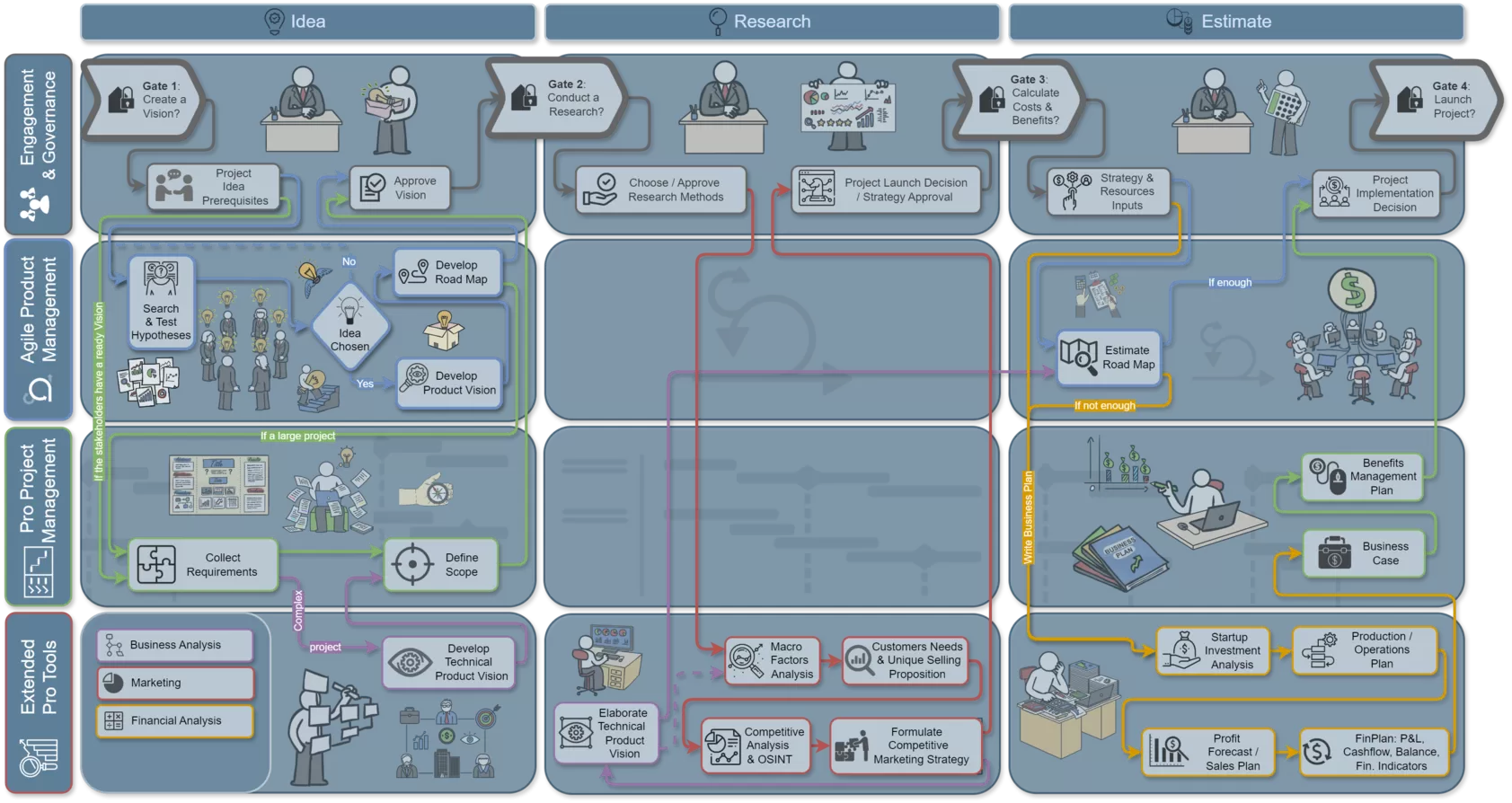
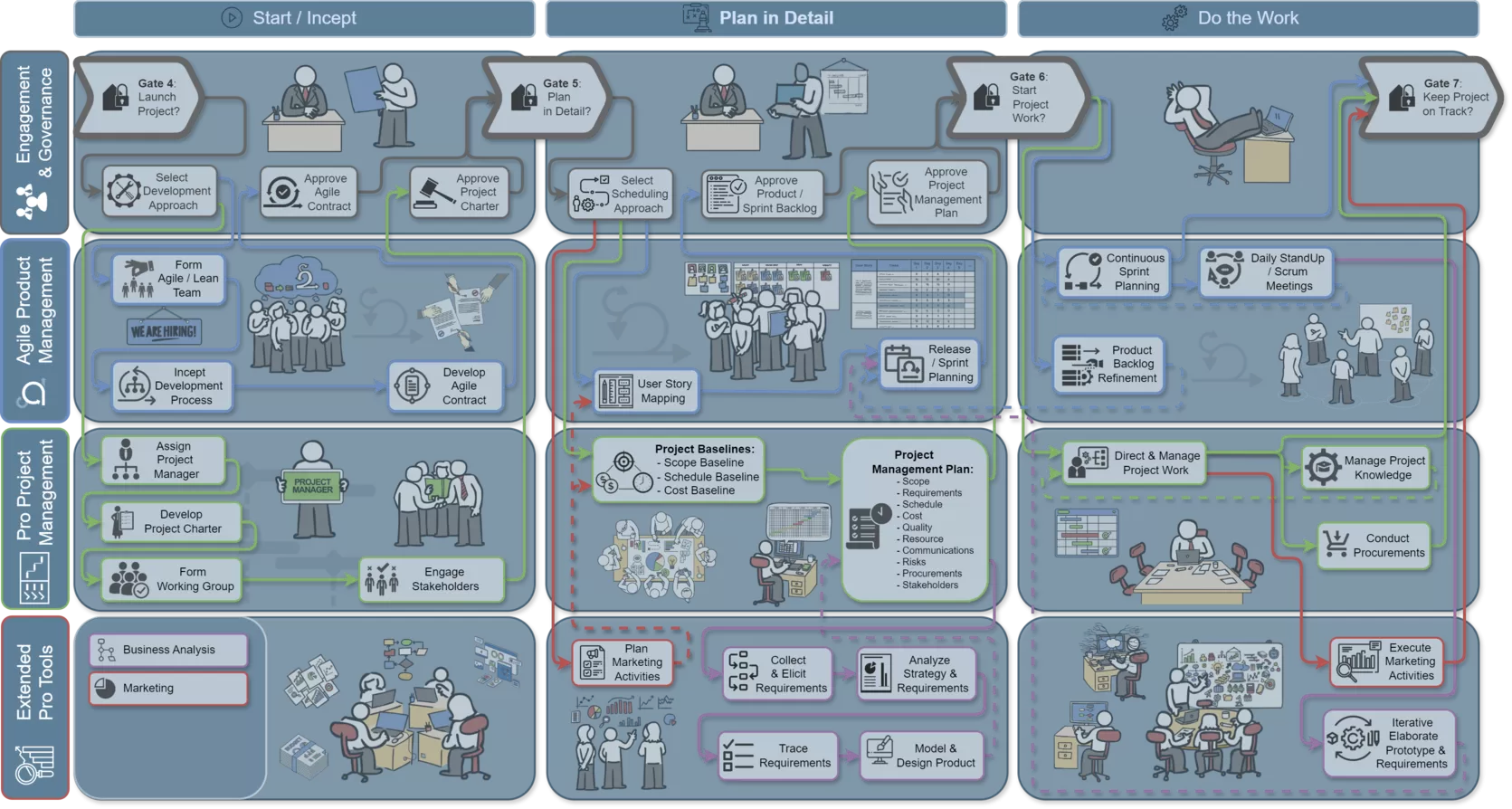
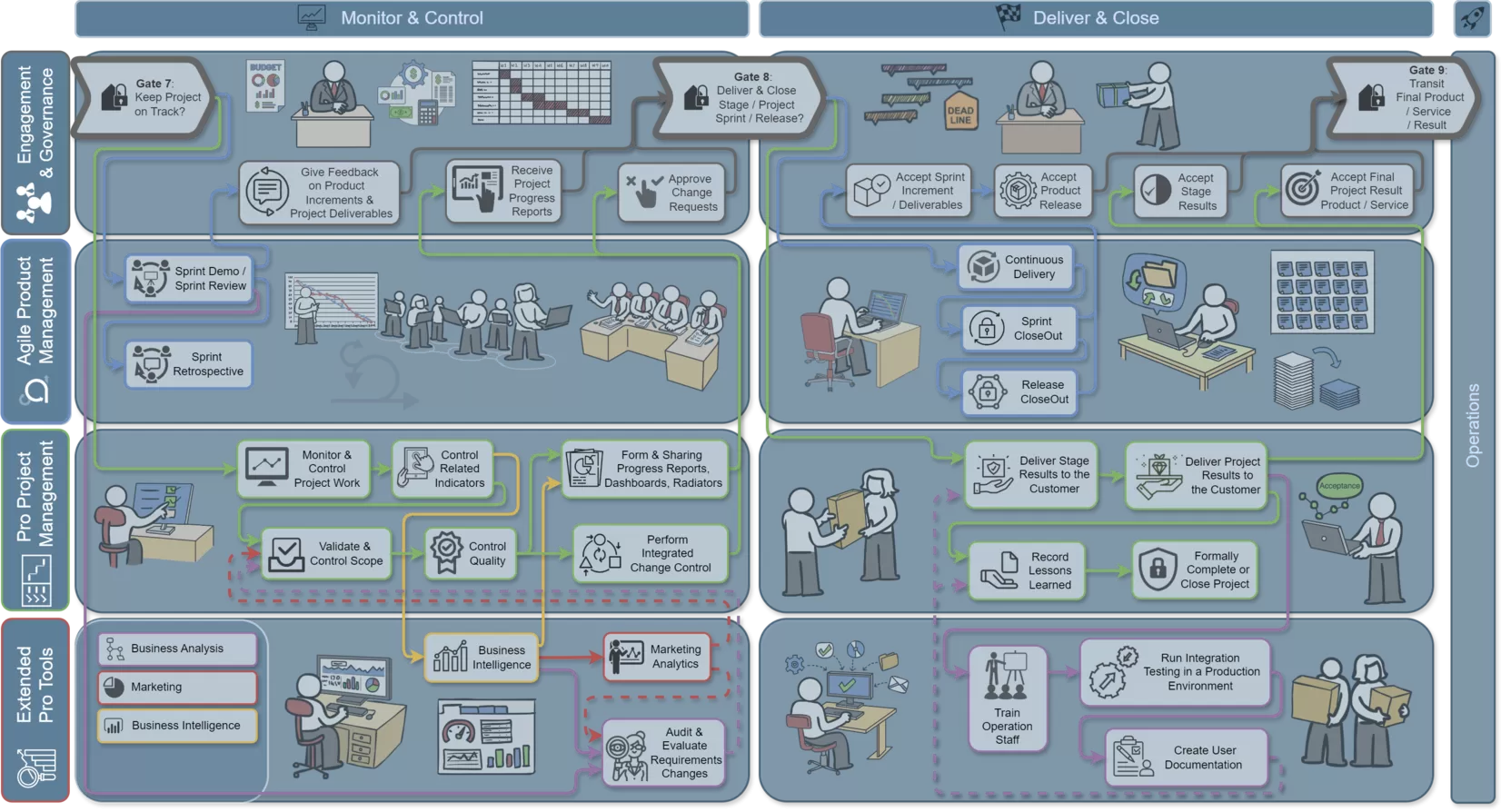
92 steps. Eight phases. 19 points where people decide.
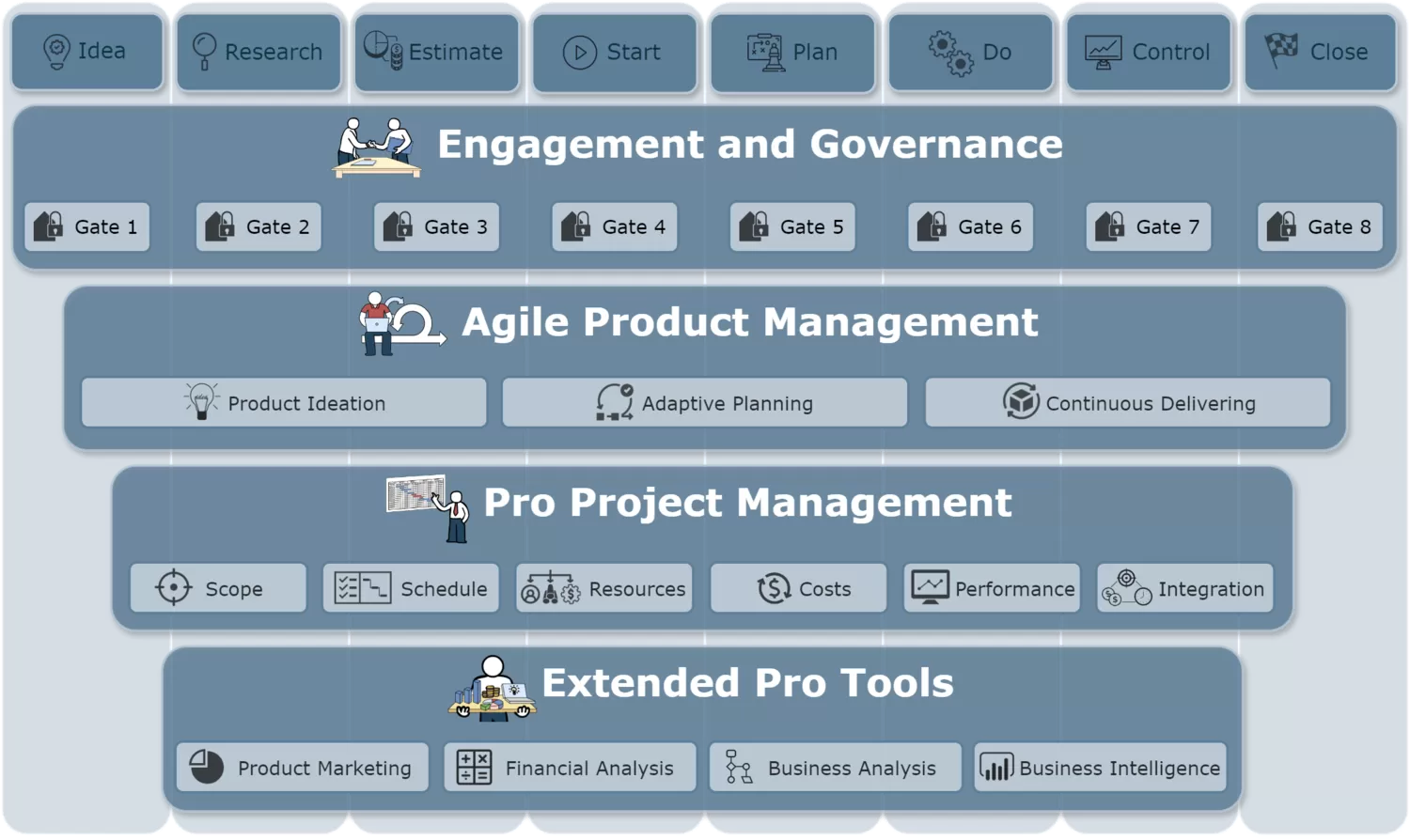
Explore eight phases across four levels of tools. The map connects decisions and activities, with branches and feedback loops as the work develops.

Open the interactive lifecycle map

Five connected parts. One project context.

Explore a question, understand a method, or bring the pieces together around your own project.

Visual knowledge

See how phases, decisions and tools connect.

Adaptable methods

Choose an approach and level of detail.

Practical tools

Use guides, templates and structured steps.

AI assistance

Explore, draft and review with human judgment.

Learning

Build understanding through study and practice.

The methodology behind the work

A connected methodology, from sources to project work.

TPM brings reference knowledge, shared terminology and a structured lifecycle into one connected model.

150+

Sources studied

Standards, practice guides, books and training materials.

80+

Materials fully extracted

Structured section by section, including TPM methodology material.

1,500+

Concept-to-source links

Connections back to the references behind the method.

2,000+

Terms in three languages

EN · RU · UK. Around 1,000 checked against official translations.

20

Practice domains

From governance and risk to product, quality and marketing.

92

Workflow steps

Eight phases, with 19 human decision points: 9 gates and 10 decisions.

Knowledge-base snapshot, October 2026. More than 100 sources are connected to concepts, model elements, excerpts or terminology. Source-material counts include editions and translations; they are not a count of unique standards.

Years of work connect 150+ sources in one model: PMBOK®, PRINCE2®, BABOK®, the Agile Practice Guide and ISO/IEC/IEEE 15288.

and others — expand the source list

Sources behind TPM — 120 references across standards, guides, books and training materials

Grouped by subject. Related editions, translations and companion materials are presented together.

Project, program and portfolio standards

  • PMBOK® Guide, 6th edition (English and official Russian translation)
  • PMBOK® Guide, 7th edition (English and official Russian translation)
  • PMI — The Standard for Program Management, 4th ed.
  • PMI — The Standard for Portfolio Management, 4th ed.
  • PMI — The Standard for Organizational Project Management
  • PMI — The Standard for Risk Management in Portfolios, Programs, and Projects
  • PMI — The Standard for Earned Value Management
  • PMI — Practice Standard for Scheduling
  • PMI — Practice Standard for Project Estimating
  • PMI — Practice Standard for Work Breakdown Structures
  • PMI — Practice Standard for Project Configuration Management
  • PMI — Project Manager Competency Development Framework
  • PMI — Talent Triangle®
  • PMI — PMP Exam Content Outline (2021)
  • PRINCE2®, 7th ed. (PeopleCert, 2023)
  • PRINCE2 Agile® (AXELOS)
  • ITIL® v3 Service Transition

PMI practice guides

  • Agile Practice Guide (English and official Russian translation)
  • Benefits Realization Management
  • Governance of Portfolios, Programs, and Projects
  • Requirements Management
  • Business Analysis for Practitioners
  • Managing Change in Organizations
  • Navigating Complexity
  • Implementing Organizational Project Management
  • AI in Project Management

Agile, Scrum and product management

  • The Scrum Guide 2020 (Schwaber & Sutherland)
  • The Nexus Guide (Scrum.org)
  • SAFe® 4.5 Reference Guide; SAFe® 6.0 materials
  • Choose Your WoW! — Disciplined Agile (Ambler & Lines)
  • Essential Scrum (Rubin)
  • Scrum: Agile Product and Business Management (Schwaber)
  • Agile Product Management with Scrum (Pichler)
  • Strategize (Pichler)
  • Agile Estimating and Planning (Cohn)
  • User Stories Applied (Cohn)
  • User Story Mapping (Patton)
  • Inspired (Cagan)
  • The Lean Startup (Ries)
  • Running Lean (Maurya)
  • Lean UX (Gothelf & Seiden)
  • Lean Analytics (Croll & Yoskovitz)
  • Business Model Generation (Osterwalder & Pigneur)
  • Value Proposition Design (Osterwalder et al.)
  • Impact Mapping (Adzic)
  • Specification by Example (Adzic)
  • Innovation Games (Hohmann)
  • The Principles of Product Development Flow (Reinertsen)
  • Unlocking Agility (Hesselberg)
  • Agile Contracts Primer (Arbogast, Larman & Vodde)
  • Ten Contracts for Your Next Agile Project (Stevens)
  • Stage-Gate Systems (Cooper, 1990) and the Stage-Gate Idea-to-Launch update (Cooper, 2008)
  • Competing Against Luck (Christensen et al.)
  • Outcome-Driven Innovation (Ulwick)
  • RICE prioritization (McBride, Intercom)
  • Hacking Growth (Ellis & Brown)
  • Startup Metrics for Pirates: AARRR (McClure)

Business analysis and requirements

  • BABOK® Guide v3 (IIBA; English and Russian)
  • PMI Guide to Business Analysis
  • Software Requirements (Wiegers & Beatty)
  • Mastering the Requirements Process — Volere (Robertson)
  • Writing Effective Use Cases (Cockburn)
  • Applying UML and Patterns (Larman)
  • The Inmates Are Running the Asylum (Cooper)
  • This is Service Design Thinking (Stickdorn & Schneider)
  • Using Customer Journey Maps to Improve Customer Experience (Richardson, HBR)
  • Facilitator's Guide to Participatory Decision-Making (Kaner et al.)

Systems engineering, quality, risk and regulation

  • ISO/IEC/IEEE 15288:2023 — System life cycle processes
  • ISO/IEC/IEEE 29148:2018 — Requirements engineering
  • ISO/IEC/IEEE 42010:2022 — Architecture description
  • ISO/IEC/IEEE 26512:2018 and 26513:2017 — Information for users
  • ISO/IEC/IEEE 29119-3:2013 — Test documentation
  • ISO 31000:2018 — Risk management
  • ISO 13485:2016 and ISO 14971:2019 — Medical devices
  • IATF 16949:2016 — Automotive QMS
  • AS9100D — Aerospace QMS
  • IEC 61160 — Design review
  • ASME Y14.5-2018 — GD&T
  • SAE EIA-649C — Configuration management
  • 21 CFR Part 820 / FDA QMSR
  • INCOSE Systems Engineering Handbook, 5th ed.
  • GAMP® 5, 2nd ed. (ISPE)
  • ISPE Baseline Guide Vol. 5 — Commissioning and Qualification
  • NIIMBL — Manufacturing Readiness Levels
  • ISTQB® Certified Tester Foundation Level Syllabus v4.0 and self-study guide
  • NIST AI Risk Management Framework 1.0

Strategy and foresight

  • Strategic Management: Concepts and Cases (David)
  • Strategic Management: Concepts and Cases (Thompson & Strickland)
  • Competitive Strategy (Porter)
  • Corporate Strategy; Managing Strategic Surprise by Response to Weak Signals (Ansoff)
  • Good Strategy / Bad Strategy; The Crux (Rumelt)
  • The TOWS Matrix (Weihrich)
  • Scanning the Business Environment (Aguilar)
  • Macroenvironmental Analysis in Strategic Management (Fahey & Narayanan)
  • Strategic Foresight — scenario building (Godet et al.)
  • Report on a Long-Range Forecasting Study — Delphi (Gordon & Helmer, RAND)
  • The Art of the Long View (Schwartz)
  • The Balanced Scorecard (Kaplan & Norton)
  • Cannibals with Forks — Triple Bottom Line (Elkington)
  • S.M.A.R.T. goals (Doran)

Marketing

  • Marketing Management, 16th ed. (Kotler & Keller)
  • Building Strong Brands (Aaker)
  • Positioning: The Battle for Your Mind (Ries & Trout)
  • Reality in Advertising (Reeves)
  • Crossing the Chasm (Moore)
  • The Hero and the Outlaw (Mark & Pearson)
  • Marketing Malpractice (Christensen, Cook & Hall, HBR)
  • Marketing Strategies for Service Firms — 7P (Booms & Bitner)

Finance, analytics and business intelligence

  • Principles of Corporate Finance (Brealey, Myers & Allen)
  • Investment Valuation (Damodaran)
  • Sensitivity Analysis in Practice (Saltelli et al.)
  • Competing on Analytics (Davenport & Harris)
  • The Data Warehouse Toolkit (Kimball & Ross)
  • Information Dashboard Design (Few)
  • Chief Executives Define Their Own Data Needs (Rockart, HBR)

Tools and templates

  • PMBOK® document templates collection (40+ templates)
  • Jira Product Discovery and Jira Plans documentation (Atlassian)
  • Microsoft Planner portfolio roadmap documentation

Founder's training materials

  • PMP® preparation course: modules, workbook, PMBOK® 6 process maps, training boards
  • CSM® and CSPO® course materials

Adapt the method

Choose the depth your project needs

Start with the question you need to answer. Use the level of detail that fits the project, and go deeper where uncertainty or complexity calls for it.
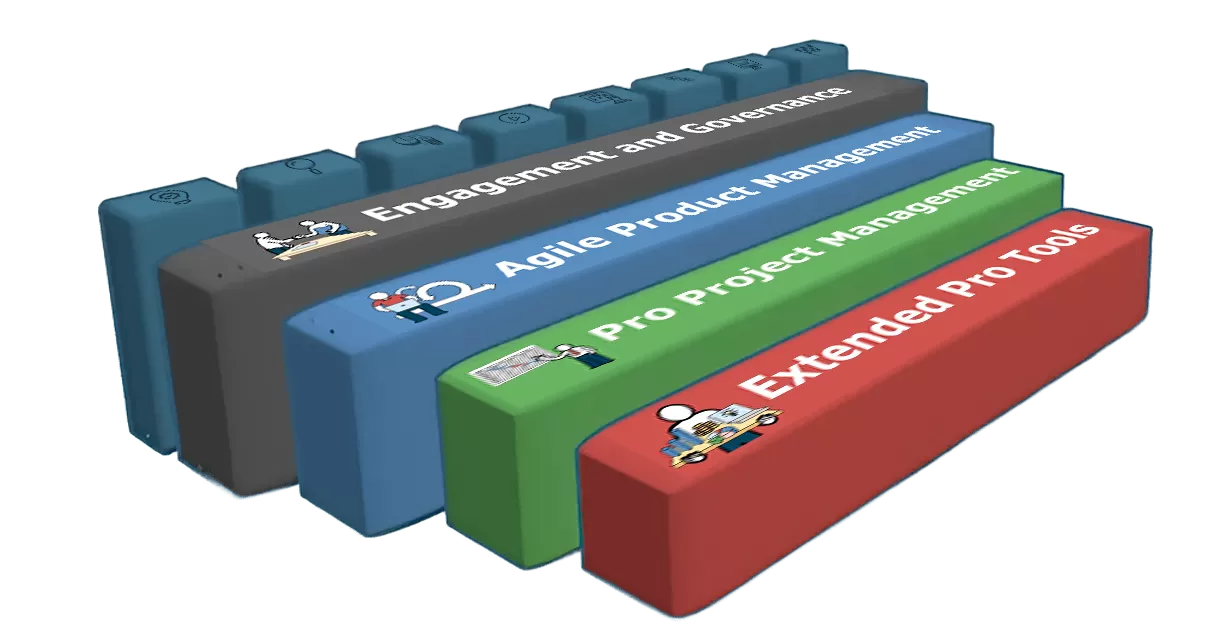
  • Engagement & GovernancePurpose, responsibilities and key decisions.
  • Agile Product ManagementDiscovery, delivery and feedback.
  • Pro Project ManagementPlanning, execution, monitoring and control.
  • Extended Pro ToolsBusiness, marketing, financial analysis and intelligence.
TPM tool levels: Engagement and Governance, Agile Product Management, Pro Project Management, Extended Pro Tools across eight project phases

Different projects need different depth

Illustrative project profiles: the work changes with uncertainty, regulation, resources and the decisions already made.

Coffee kiosks

Focus on location, demand, operating costs and seasonality.

A SaaS service

Explore the customer problem, product assumptions and digital infrastructure.

AMPERO charging network

Examine market evidence, physical infrastructure and regulatory constraints.

Put the framework to work

From a question to a useful project material

A project vision is one example. Explore the relevant method, examine the assumptions, and use a structured guide to develop your own material.

Explore

Find the method
for your question.

Adapt

Choose the depth
your project needs.

Apply

Develop materials
for your project.

The map provides context; the guide helps you work through the detail.

Browse the Tool Guide

Project administrator · AI

TPM AI: your AI-based project administrator

Keep the method, the work and the conversation connected.

The design brings three perspectives together: the project step you are working on, the methodology that explains it and AI assistance that helps you examine the work.

You review the reasoning and decide what becomes part of the project. Human-in-the-Thought-Loop keeps authorship and responsibility with you.

Draft
Review
Approve
Next step

You review what AI prepares. Accepted work becomes context for the next decision.

AI assistance by design

Prepare and compare

Drafts and alternatives to review, adapt and understand.

Ground the work

Source-aware research keeps findings distinct from assumptions.

Keep context

Project information and earlier decisions inform the next question.

Notice carefully

Focused prompts surface gaps without taking over.

Available to explore

  • The TPM Lifecycle Map: 92 steps across 8 phases.
  • Step guides and a multilingual methodology library.
  • AI-assisted drafting and research in the early project lifecycle.

In development

  • Broader tool coverage from Start through Close.
  • A consistent step, article and AI conversation experience.
  • Cross-step checks and expanded guided learning.

Human accountability

People carry the responsibility

One person may hold several project roles. These are responsibilities in the workflow, not AI personas.

One person
Purpose &
investment
Work
coordination
Market
evidence
May hold several project roles

Sponsor

Own the purpose and investment decision.

Project lead

Coordinate the work and its next decision.

Marketing specialist

Examine demand, customers and market evidence.

From approach to product design

Human-in-the-Thought-Loop, built in

The principles guide how TPM is designed. The map and guides can be explored now; integrated AI capabilities continue to develop.

Human capability

Learn the method alongside the work, using step guides and examples.

Visible transitions

The lifecycle contains 19 decision points: 9 gates and 10 decisions.

Amplify each step

Give AI a bounded task and review its draft in the context of that step.

Inspectable work

Examine the reasoning and sources; distinguish evidence from assumptions.

Knowledge beside action

Connect the project step, its methodology and the AI conversation.

Built-in improvement

Cross-step consistency checks are part of the development roadmap.

Learn through execution

Use examples, then apply and test the method in your own project.

Human-governed workflow

Assign responsibility to people. A decision belongs to a person, never to AI.

Read the full paradigm

Build understanding

Learn it. Explore it. Apply it.

Visual explanations make a method easier to explore. Use the map and guides to connect an idea with the work of a project.

The learning marketplace connects courses, examples and practice. Explore the course collection and bring new knowledge into your project work.

Explore learning

Start with the question in front of you.

Find your place on the map, explore the method and choose a useful next step.

Explore the TPM Lifecycle Map