


Frame the problem
Set the purpose, context and constraints before asking AI for an answer.
Human-in-the-Thought-Loop
Keep the human inside the thinking.
AI assists, drafts and accelerates. People frame the problem, reason through alternatives, decide, verify and learn.
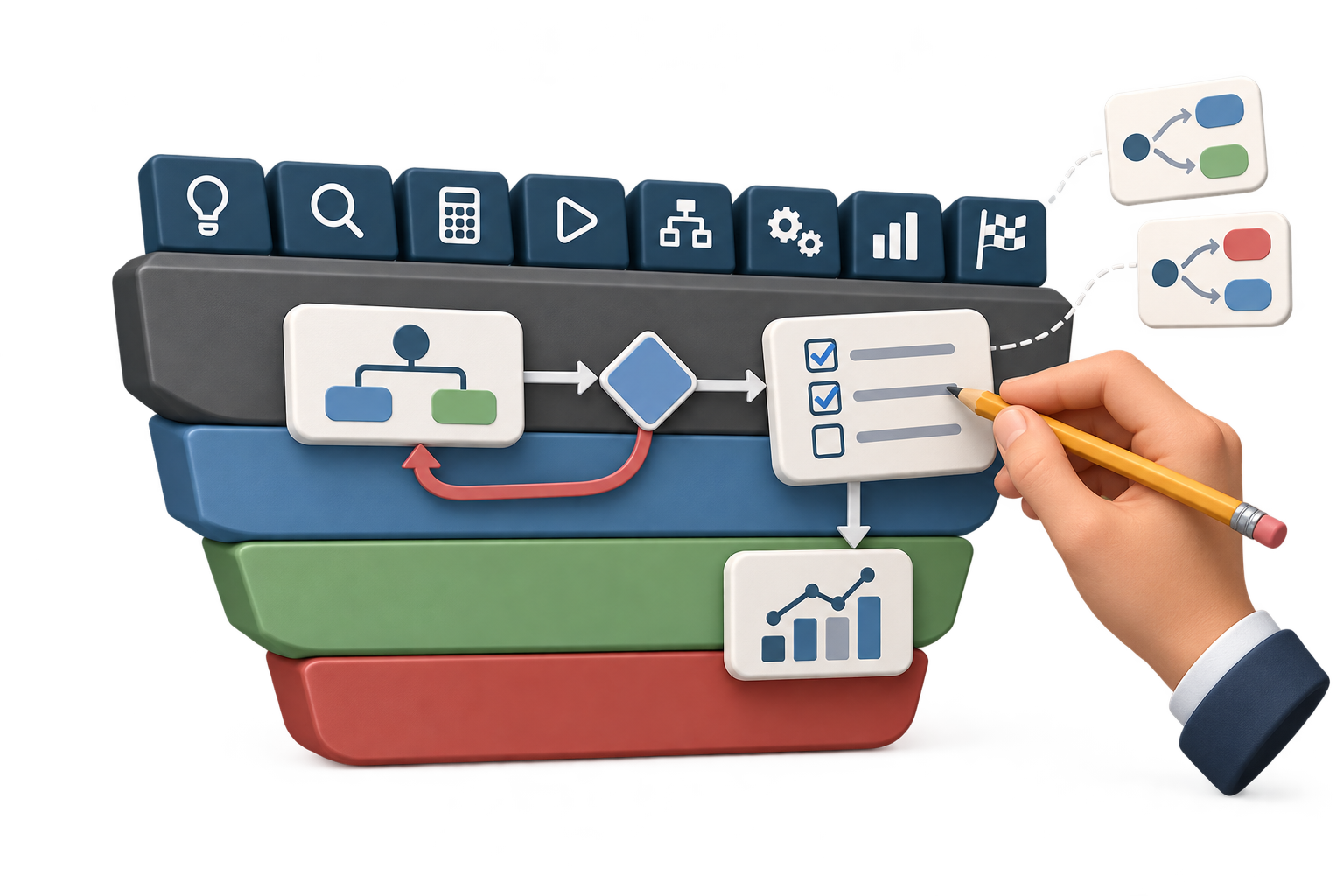
Set the purpose, context and constraints before asking AI for an answer.
Challenge assumptions and compare alternatives with evidence.
Explain the choice, check its consequences and learn from what follows.
Keep steps, intermediate work and checkpoints visible. Let people question the basis of a recommendation and revise the work behind it.
A proposed design pattern for AI systems, applicable beyond project management.
Use AI to develop mastery and judgment alongside better work.
Preserve the right and ability to understand, challenge and improve decisions.
Measure what repeated use does to the person, alongside output quality and speed.
Make the movement from hypothesis to decision, plan and commitment explicit.
Apply strong AI assistance within a bounded, understandable task.
Make intermediate artifacts understandable, editable and traceable to evidence.
Put concepts, criteria and examples next to the work they guide.
Provide ways to detect gaps, check quality and improve the system.
Make real work a place to develop understanding and skill.
Keep the trajectory visible, decisions owned and verification natural.
Reference implementation
A project work system built around these principles: visual knowledge, adaptable methods, working tools, AI assistance and learning.
The approach can inform other products. Its effects on professional capability remain a question for evaluation.
Explore the FrameworkAn open approach
Use these principles in your product. Free to use and adapt with attribution — licensed under CC BY 4.0.
Suggested citation: Kosheliev, O. (2026). Human-in-the-Thought-Loop Paradigm, v1.0. tpm.wiki/paradigm.
Download PDF →Not a member yet? Register now
Are you a member? Login now