
Topic Definitions #
Define Scope #

Define Scope
Is the process of clearly defining and documenting the boundaries and tasks of a project to understand exactly what is included and excluded. This helps avoid misunderstandings among project stakeholders and ensures focus on achieving the set goals.
Scope Creep #

Scope Creep
Refers to the unauthorized or uncontrolled expansion of a project’s scope after it has started. This can include new features, tasks, or requirements being added without proper approval or adjustments to the project plan. Scope creep can lead to budget overruns and delays.
Backlog #
Backlog — a prioritized list of tasks, features, or requirements that need to be completed during a project.

Product Backlog
— a list of all the features, functions, and tasks to be completed in a product development project, ordered by priority.
Iteration Backlog
— a subset of the product backlog, consisting of features and tasks that will be worked on during the current iteration or sprint.
Change Control Board #
Change Control Board
— a group of individuals responsible for reviewing and approving changes to a project’s scope.
Define Scope
Is the process of clearly defining and documenting the boundaries and tasks of a project to understand exactly what is included and excluded. This helps avoid misunderstandings among project stakeholders and ensures focus on achieving the set goals.
Scope Creep
Refers to the unauthorized or uncontrolled expansion of a project’s scope after it has started. This can include new features, tasks, or requirements being added without proper approval or adjustments to the project plan. Scope creep can lead to budget overruns and delays.
Backlog — a prioritized list of tasks, features, or requirements that need to be completed during a project.
Product Backlog
— a list of all the features, functions, and tasks to be completed in a product development project, ordered by priority.
Iteration Backlog
— a subset of the product backlog, consisting of features and tasks that will be worked on during the current iteration or sprint.
Change Control Board
— a group of individuals responsible for reviewing and approving changes to a project’s scope.
Weaving the Threads and Drawing the Line #
At this stage of project development, we have already collected and analyzed requirements, gathered key information about the product, and structured it effectively. This foundation now allows us to move to the pivotal moment—defining the project scope (Define Scope). Now, we consolidate everything we have identified, assessed, and documented to create a unified vision of what the project entails and the outcomes it aims to achieve.
Vision and Strategy
SCOPE
Goals and Milestones
SCOPE
Product Vision
SCOPE
Requirements
SCOPE
Product and Project Roadmaps
SCOPE
Constraints, Assumptions, Exclusions & Risks
SCOPE
The project triangle consists of three interrelated elements—time, cost, and scope—which serve as key guidelines in project management.
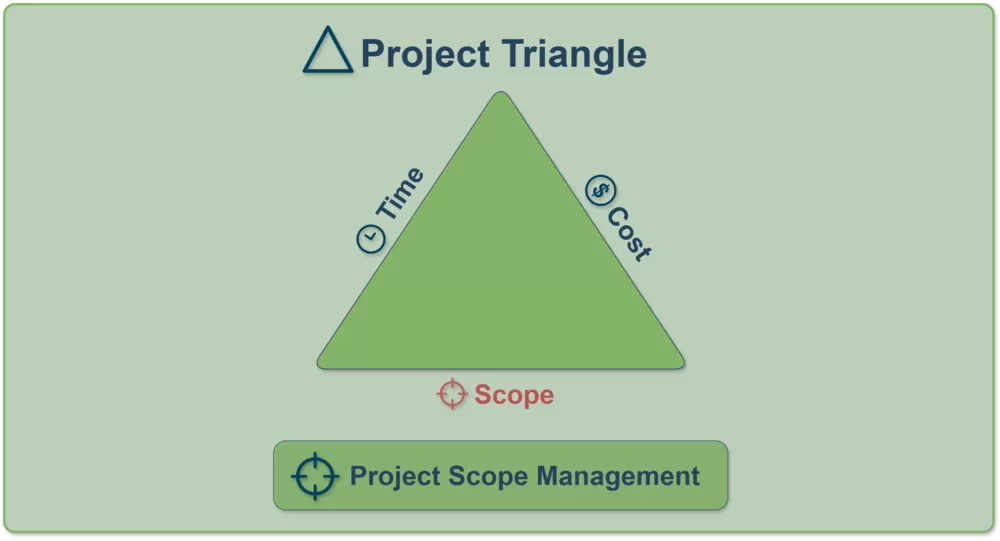
During scope management, we clearly define the project’s boundaries. By managing scope effectively, we ensure that the project remains within its constraints and meets the client’s expectations.
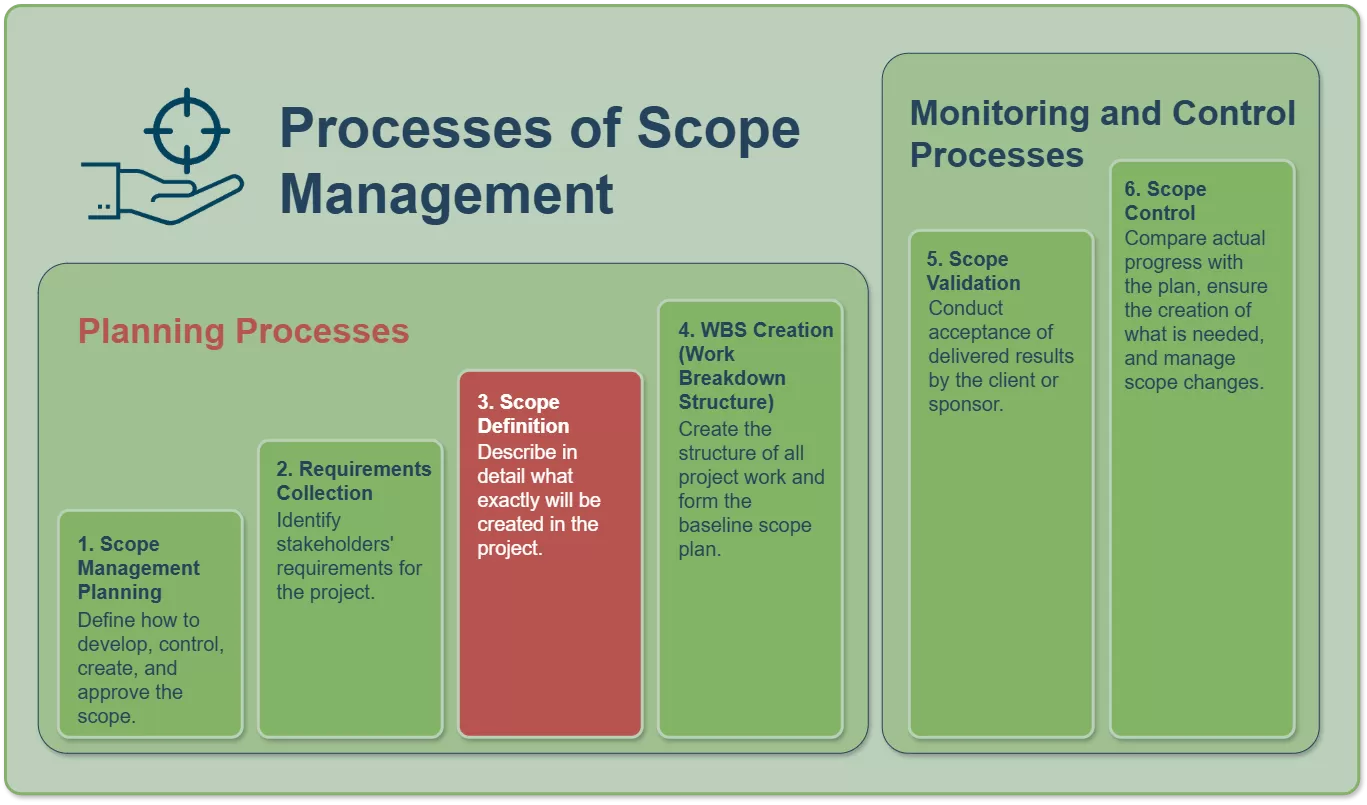
Define Scope consolidates all the information we gathered during the analysis process. We gathered stakeholder requirements, developed the project vision and objectives, validated hypotheses, and defined the product’s scope. Now, we must structure all these elements into a clear and concise project scope description that will guide the entire team.
Focused Scope Management #
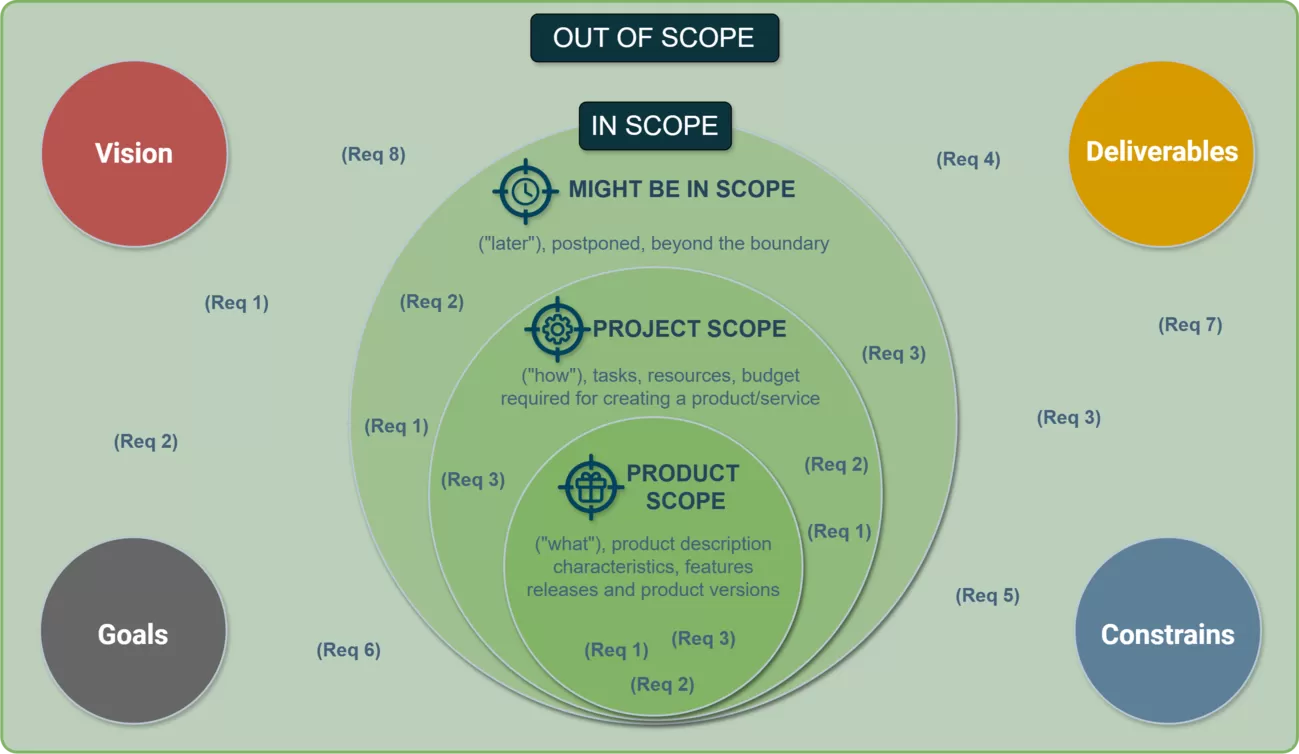
The diagram above illustrates how we divide and manage project and product scope, emphasizing what the project includes and what falls outside its boundaries.This structured approach prevents misunderstandings among stakeholders and mitigates uncontrolled scope expansion, commonly known as scope creep. Let’s explore the details and their significance in project management.
1.Product Scope
-

Features and Characteristics: #
The product scope outlines the key features to be implemented, including functional requirements, technical specifications, and user scenarios.
-

Releases and Versions: #
Product development and delivery often follow a phased approach. Each release introduces new product versions, adding value or improvements at every stage.
-

Additional Focus: #
Collaborating closely with users and stakeholders helps identify the features that provide the most value.
2.Project Scope
-

Tasks and Resources: #
The project scope defines the tasks to be completed and assigns the required resources—human, financial, and time—to achieve the objectives.
-

Budget and Deadlines: #
The project operates within clear constraints, including budget limits and work schedules. These boundaries help manage expectations effectively and optimize the execution process.
-

Execution Control: #
We continuously monitor the project scope, track deviations, and make timely adjustments to ensure the project stays aligned with its objectives.
3.Might Be In Scope
Additional Focus:
Managing this area effectively helps avoid conflicts and maintain flexibility. The team documents “deferred” items as potential tasks for future phases while staying focused on current priorities.
4.Out of Scope
Example of the Approach:
During early discussions, if proposed features or activities conflict with project objectives or exceed its budget and timeline, we categorize them as Out of Scope. This prevents unnecessary expenses and time losses.
Relationship Between Scope Levels #
The four scope levels—Product Scope, Project Scope, Might Be In Scope, and Out of Scope—form an interconnected system:
-

Product Scope #
defines the final outcome expected by the client.
-

Project Scope #
determines how the team will achieve this outcome.
-
Might Be In Scope #
preserves flexibility for future improvements.
-

Out of Scope #
protects the project from unnecessary expansions and loss of focus.
By defining each area clearly, the project team can work cohesively, minimize risks, and deliver value within the agreed timeline and budget.
Managing Scope Expansion: Combating Scope Creep and Fixing Project Scope #
One of the biggest challenges in project scope management is preventing scope creep—where uncontrolled additions blur project boundaries. To address this, we must not only define the project scope clearly but also implement effective change management strategies.
1.What Is Scope Creep? #
Project Scope
Project scope refers to the total amount of work that will be accomplished during a project. The scope is made up of the tasks, objectives, and deliverables of the project.
Definition
Scope creep is a term that refers to the expansion of scope throughout the course of a project, usually resulting in negative consequences.
Is It Bad?
Scope creep can be harmful to teams, but it isn’t inherently a bad thing. Scope creep is mainly the result of stakeholders adding new requirements or customer feedback changing the course of a project.
A project experiences Scope Creep when its scope expands uncontrollably, causing budget overruns, delays, or a decline in the final product’s quality.
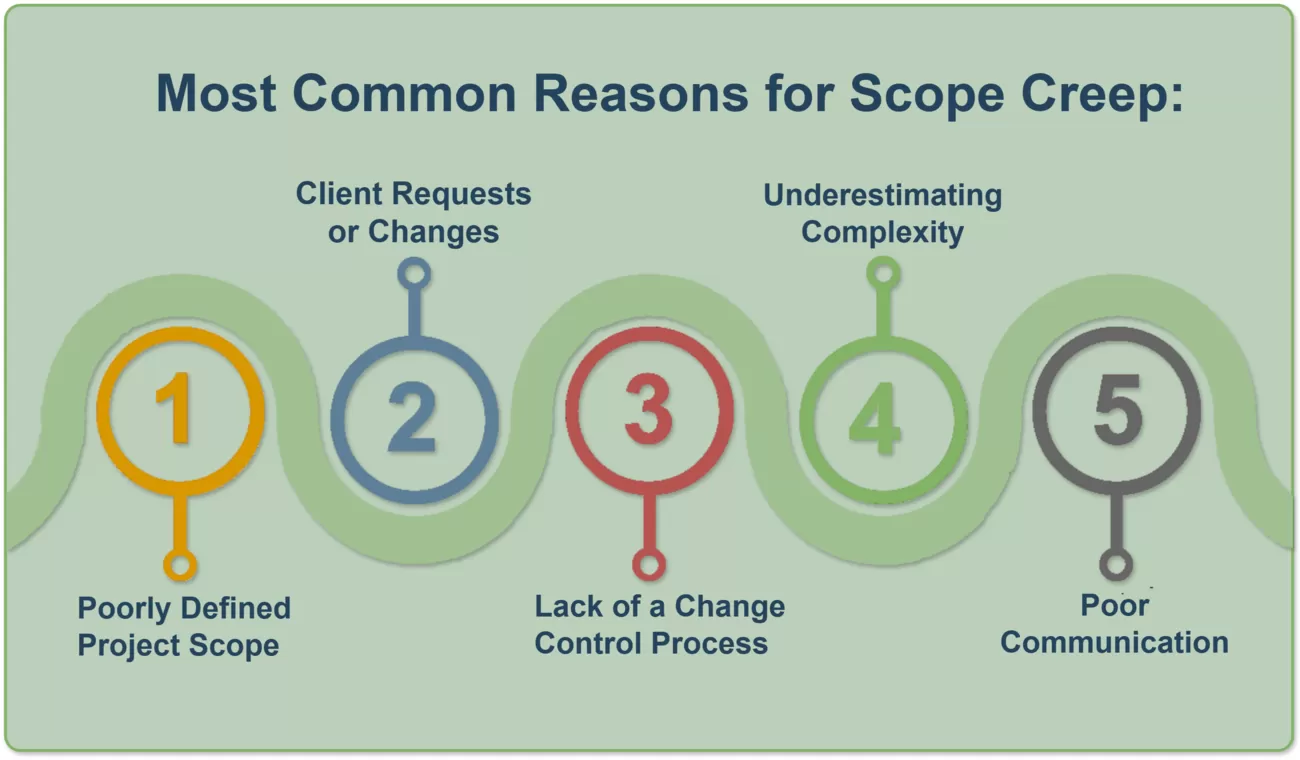
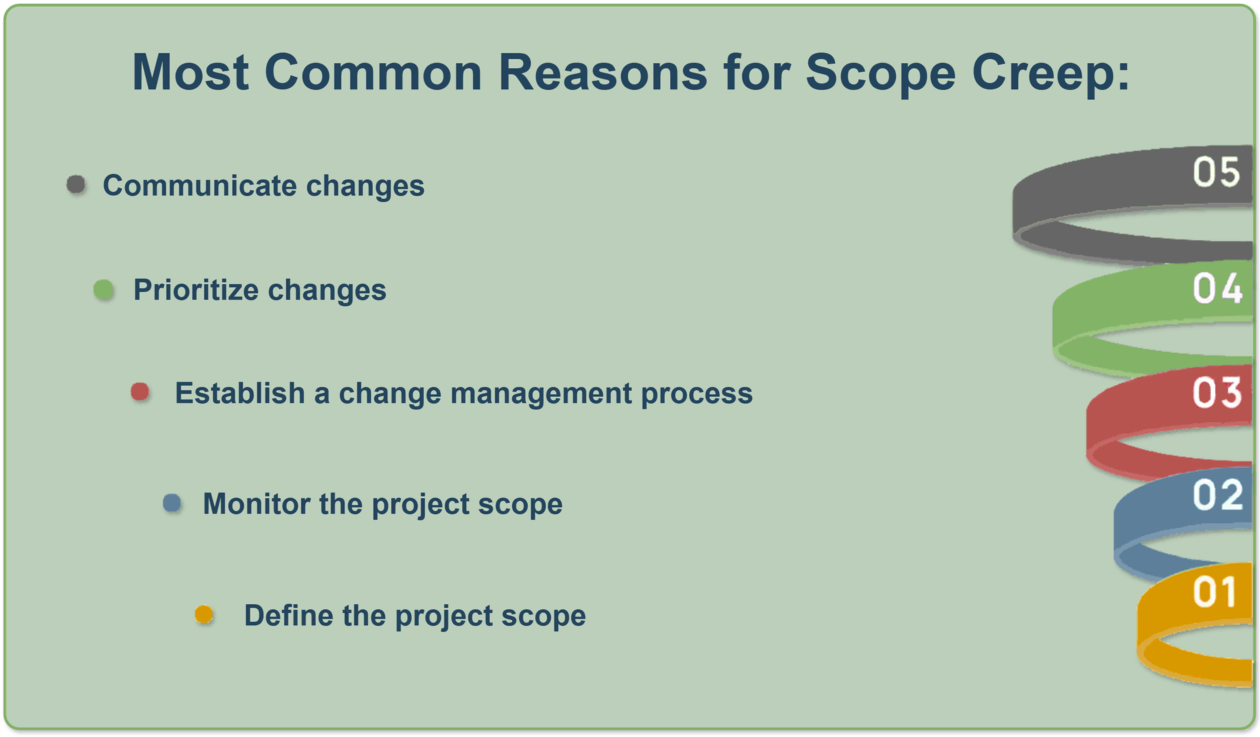
Causes of Scope Creep:
- Unclear project scope definition at the initial stage.
- Frequent client change requests.
- Lack of change control processes.
- Overestimation of team capabilities or underestimation of task complexity.
- Poor communication within the team or with stakeholders.
Scope creep can provide benefits in some cases, but without proper management, it becomes a serious project risk.
2. Strategies to Combat Scope Creep #
Define Scope consolidates all the information we gathered during the analysis process. We gathered stakeholder requirements, developed the project vision and objectives, validated hypotheses, and defined the product’s scope. Now, we must structure all these elements into a clear and concise project scope description that will guide the entire team.
-

Clearly Defining Scope at an Early Stage #
Creating a detailed Scope Statement that serves as an official document agreed upon by all stakeholders.
-

Establishing a Structured Change Management Process #
Implementing a framework where each new initiative is analyzed for alignment with project goals and its impact on deadlines and budget is assessed.
-

Prioritizing Changes #
Not all changes are equally important. Identifying key tasks and deprioritizing less critical ones helps maintain the team’s focus.
-

Regular Backlog Updates #
Within an Agile approach, iterative backlog management allows for changes to be incorporated without losing sight of the project’s overall goal.
-

Continuous Scope Monitoring #
Regularly reviewing progress against planned tasks helps the team stay on track.
-

Transparent Communication of Changes #
The importance of clear and timely communication with the team and stakeholders cannot be overstated.
3. Scope Freeze #
At a certain stage, the team may impose a Scope Freeze to halt new tasks or changes until the current phase or iteration is complete.
When It Is Necessary:
- The project faces budget or time constraints.
- The team risks losing focus on priorities.
- Stability is required to complete key tasks.
How to Fix the Scope:
- Set strict boundaries for changes.
- Establish a Change Control Board or assign responsible individuals.
- Ensure the entire team fully understands and supports the decision.
4.How to Avoid Scope Creep
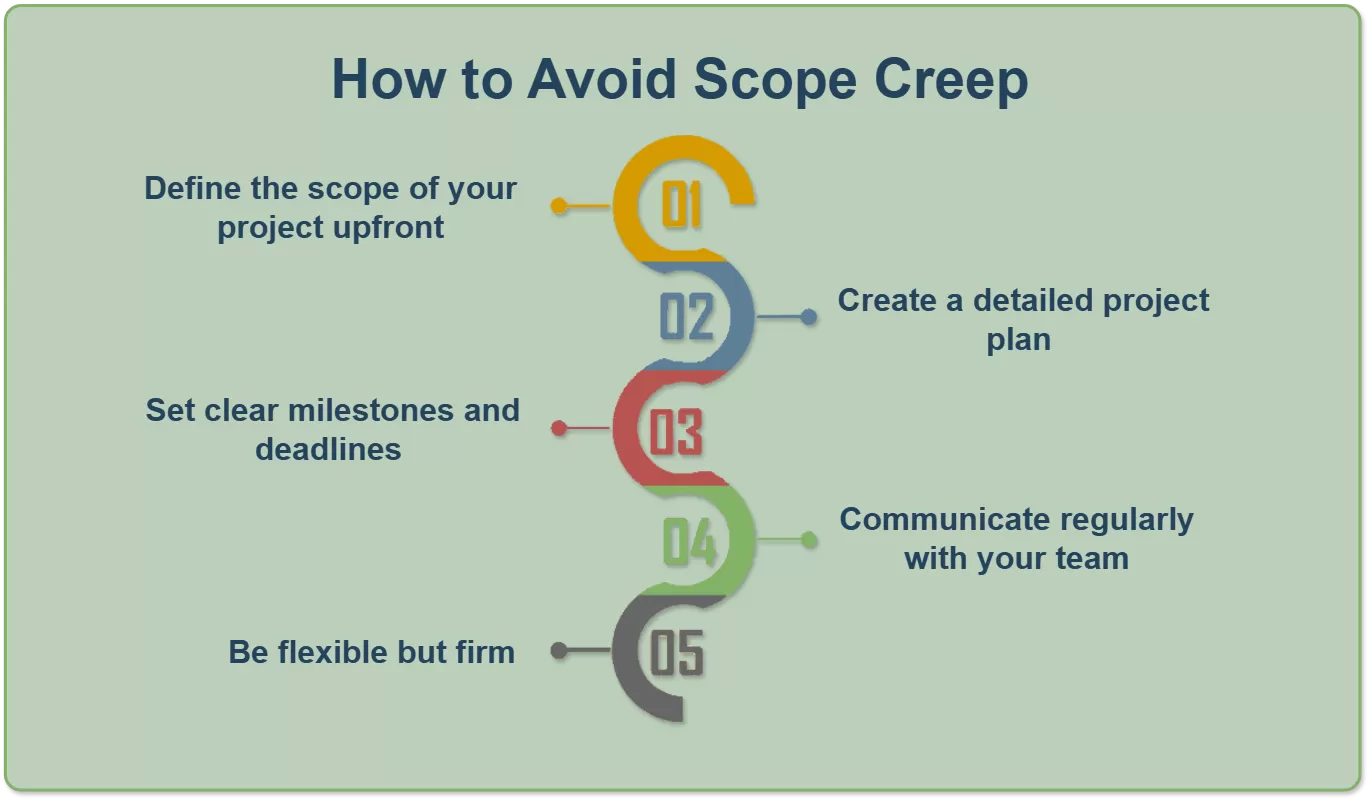
Create a Detailed Project Scope Statement:
- Define the project scope from the start.
- Develop a comprehensive Approved Project Scope Statement.
- Set clear goals and success criteria.
- Establish a controlled but flexible change management process.
- Communicate consistently with the team and stakeholders to maintain transparency.
Balancing flexibility with discipline ensures effective scope management. This approach helps teams complete projects on time, within budget, and at the desired quality level while minimizing scope creep risks.
Approved Project Scope Statement #
The process of defining scope includes key components such as:
-
Collected Requirements #
all identified requests and expectations of stakeholders.
-

Product Vision #
a strategic representation of the product, its goal, and purpose.
-
Hypotheses and Ideas #
concepts that have undergone filtering and evaluation, forming the foundation for further project steps.
-

Constraints, Assumptions, Exclusions, and Risks #
potential barriers and assumptions that may impact the project and must be considered for successful task execution.
At this stage, the most critical document is the Project Scope Statement – the approved description of the project scope. The team creates this document by consolidating all collected information. It serves as an official guideline, clearly outlining the project’s objectives, tasks, key deliverables, and constraints.
| Process Steps | Documents | Techniques and Tools |
|---|---|---|
| 1. Plan Scope Management | ||
| 2. Collect Requirements |
| |
| 3. Define Scope |
|
This document forms the foundation for all subsequent stages and prevents unplanned changes from disrupting the project. It sets the project’s direction, ensures transparency, and acts as a guideline for the entire team, helping them stay focused on the defined objectives.
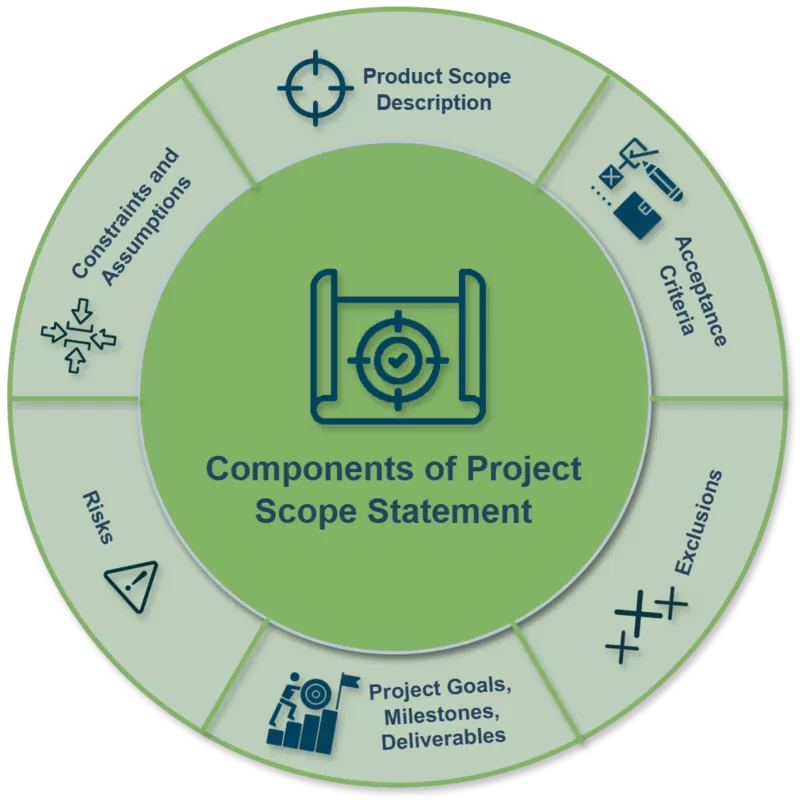
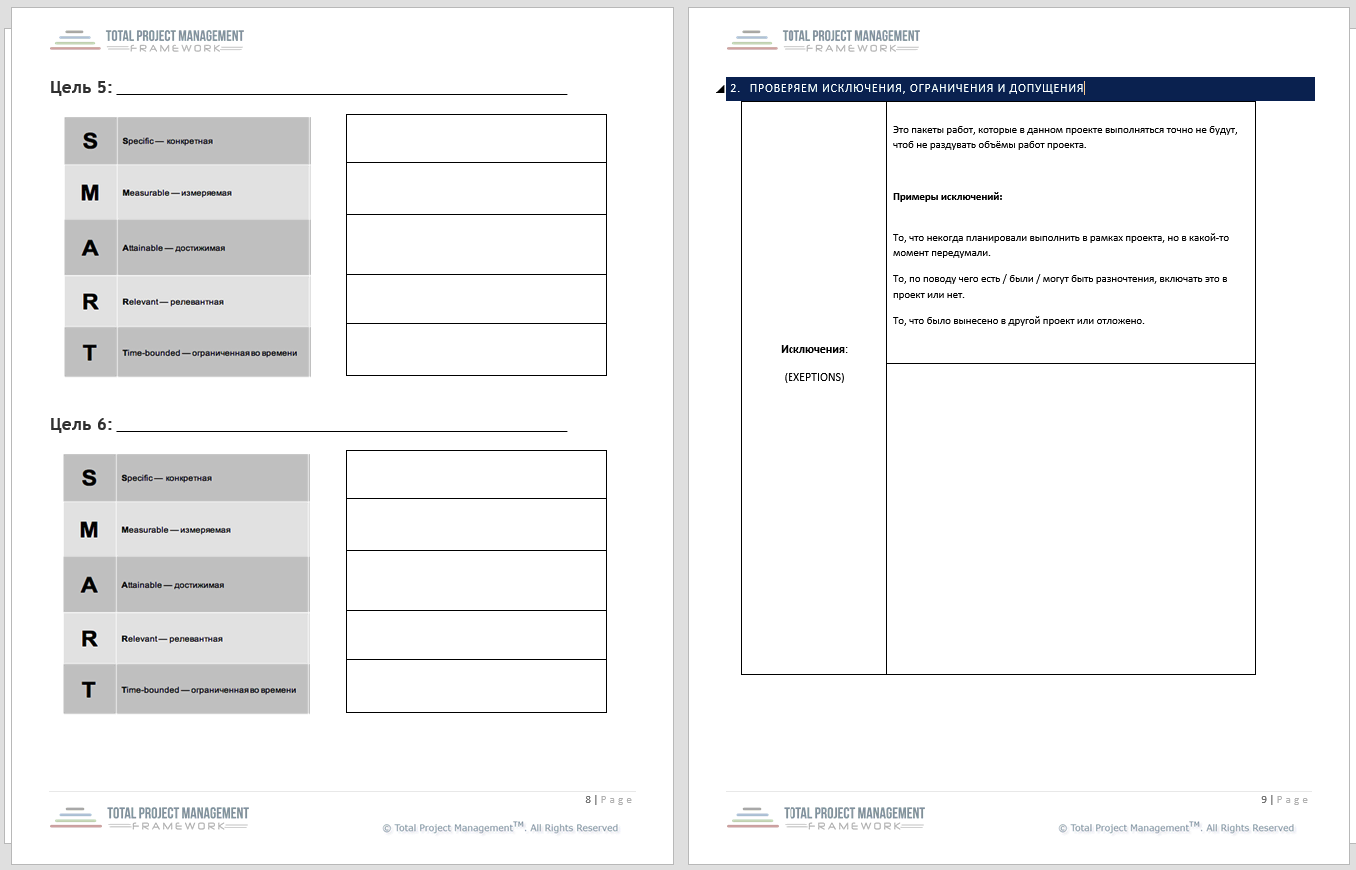
The Project Scope Statement consists of several components that help clearly define what will be created and which elements will not be included in the project’s scope:
-

Product Scope Description #
This section defines the project’s product, detailing its configuration and planned characteristics within the project scope. Ideally, the Product Scope Description aligns with the Product Vision, ensuring consistency in development.
-

Project Goals, Milestones, Tasks, and Expected Deliverables #
The project team establishes clear objectives and defines exactly what needs to be created during execution.
-
Acceptance Criteria #
The team sets measurable parameters to evaluate project results and determine whether they meet expectations.
-

Constraints and Assumptions #
Throughout all project phases, the team considers key constraints and assumptions to ensure smooth execution and risk mitigation.
-

Exclusions #
To prevent misunderstandings and uncontrolled scope expansion, the team explicitly defines what falls outside the project scope.
-
Risks #
At this stage, the team identifies known and anticipated risks. A more detailed risk analysis and mitigation plan will follow in later project planning phases.
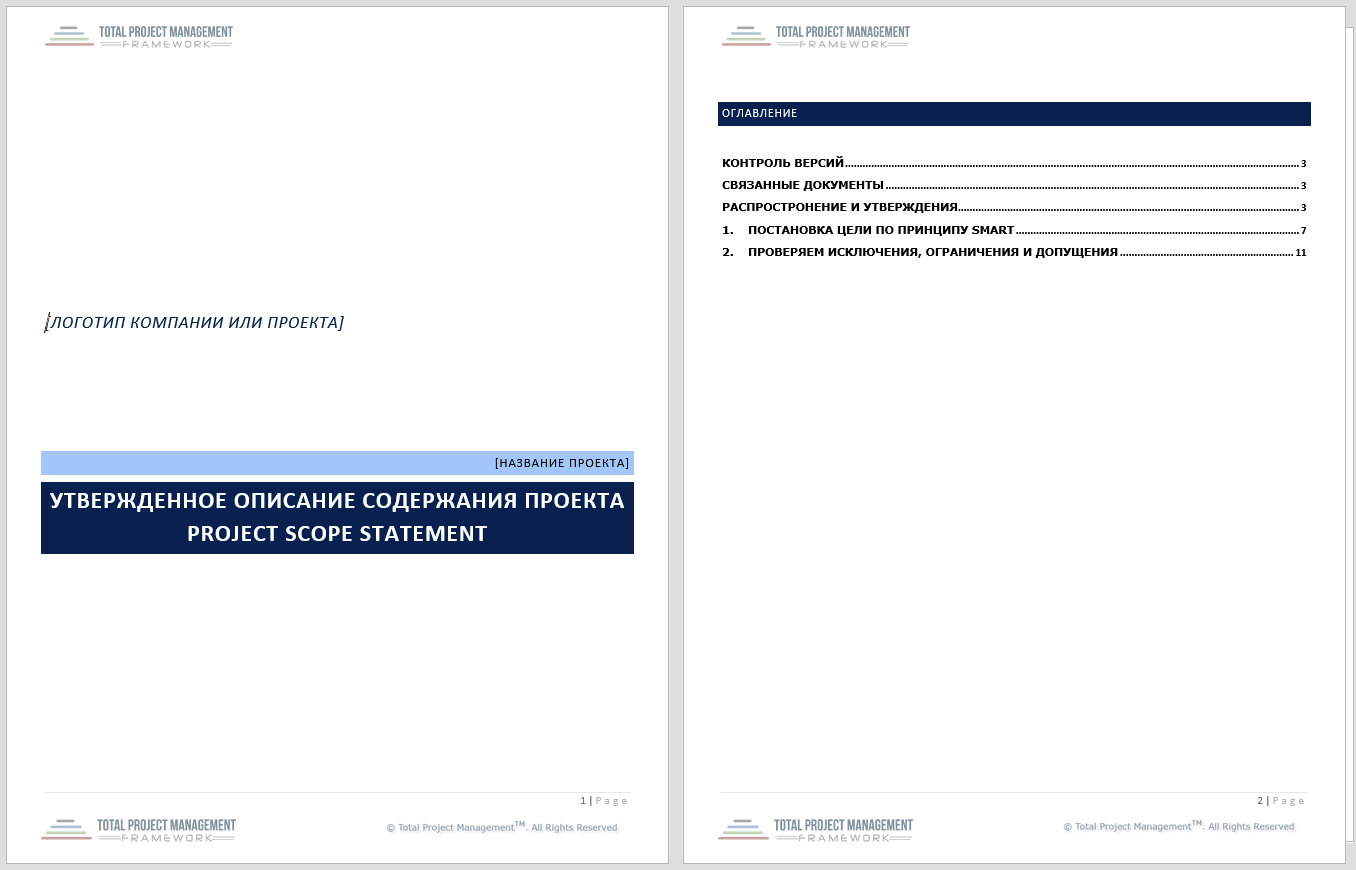
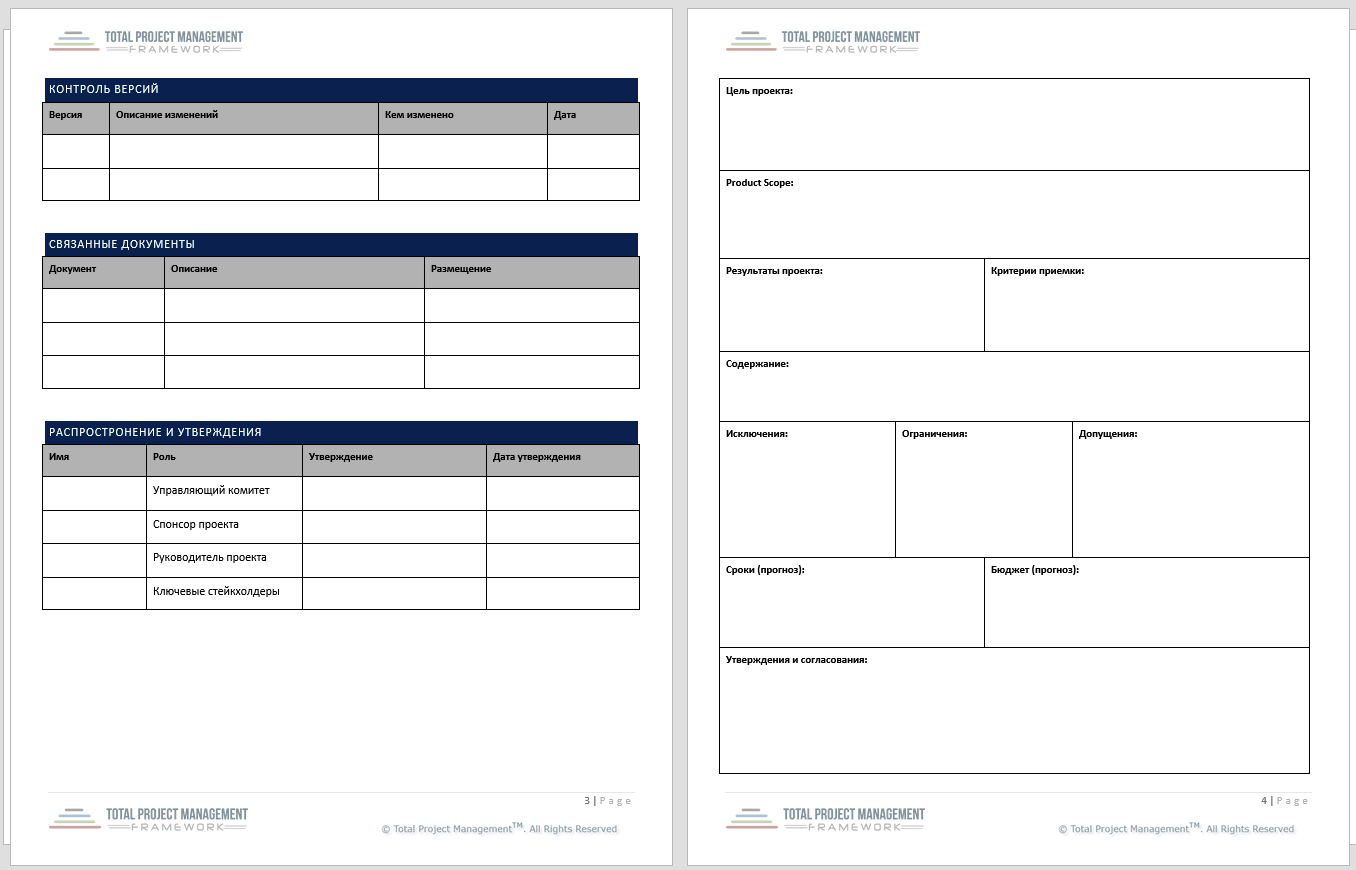
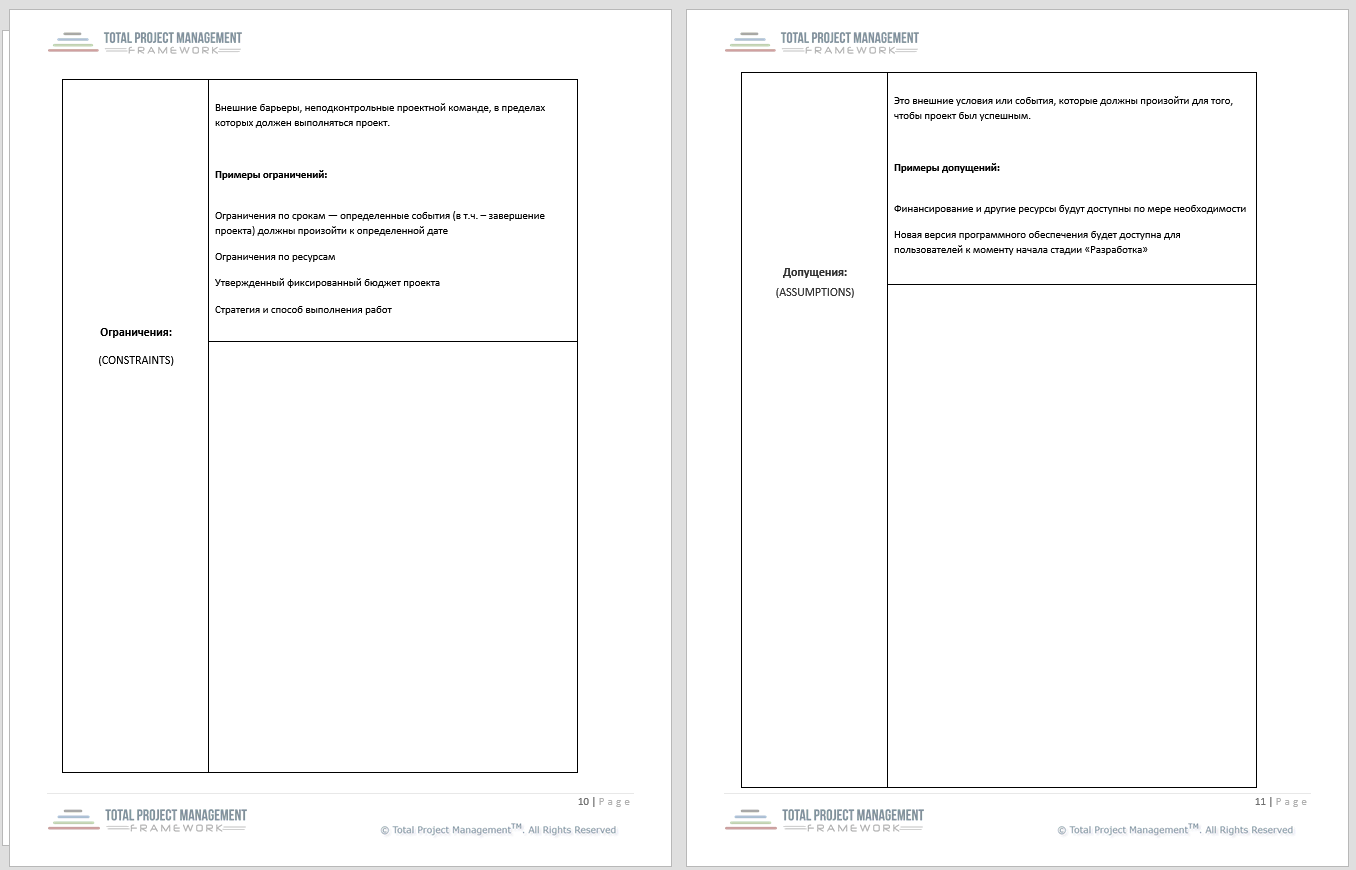
Thus, defining the project scope not only finalizes the analysis conducted in the previous stages but also transforms it into concrete and measurable goals that will guide us throughout the entire project.
Agile Scope Management #
Agile Scope Management provides a flexible approach to handling project scope, allowing teams to adapt goals and requirements throughout development and testing. Rather than fixing the scope permanently, teams continuously refine their work based on real-time conditions and experience.
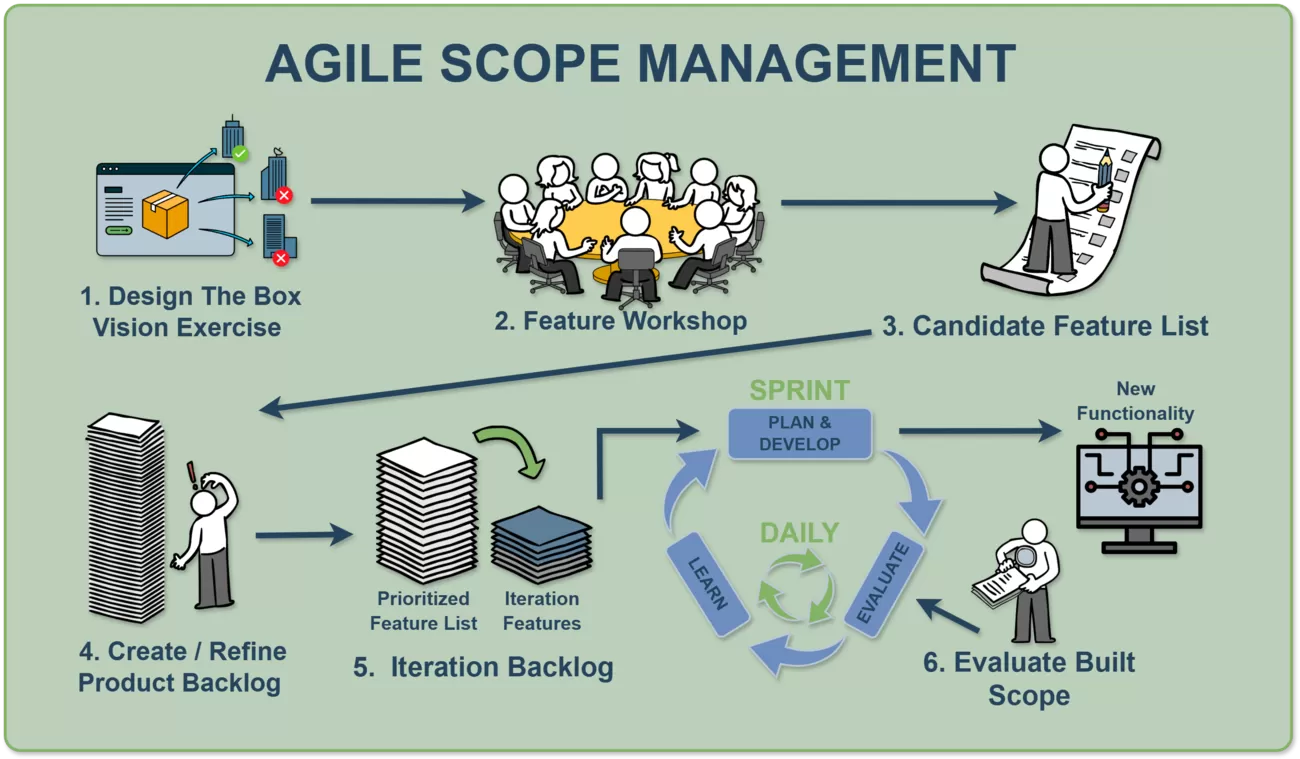
The diagram below represents this process in six key steps that ensure smooth and effective scope management within the Agile framework.
Agile Scope Management enables teams to balance their initial plan with the need to adapt to changing requirements and market conditions. By continuously learning from feedback and analyzing progress, teams refine the project to better align with user needs and industry demands.
This iterative approach ensures that the final product remains relevant and valuable, increasing its success in the market.
Conclusion #
Effective Project Scope Management serves as the backbone of successful project execution. It ensures that every stakeholder shares a unified understanding of what the project will deliver, how it will be accomplished, and what remains outside its boundaries. The Project Scope Statement becomes the cornerstone of this process, consolidating requirements, vision, assumptions, constraints, and risks into a single, structured document that provides clarity and direction for the entire team.
Throughout the project lifecycle, maintaining control over the scope is essential to avoid the pitfalls of scope creep—the uncontrolled expansion of project objectives that often leads to budget overruns, schedule delays, and diminished quality. Tools such as the Scope Creep Matrix and Scope Freeze are vital for preserving project stability, helping teams track, assess, and formally approve every change request before implementation.
The article also emphasizes the importance of Agile Scope Management, which introduces flexibility into the traditional framework. By continuously refining the scope through iterative feedback, feature workshops, and sprint-based evaluations, teams can adapt to evolving requirements and market dynamics without losing alignment with the project’s original vision. This integration of structured planning and adaptive execution creates a balanced approach that supports both stability and innovation.
Ultimately, project scope management is not merely an administrative process but a strategic discipline that defines boundaries, priorities, and success criteria. It bridges the gap between conceptual vision and measurable outcomes, ensuring that every effort contributes to the project’s intended value. By combining clarity with adaptability, teams can maintain focus, optimize performance, and deliver consistent results—on time, within budget, and in line with stakeholder expectations.


